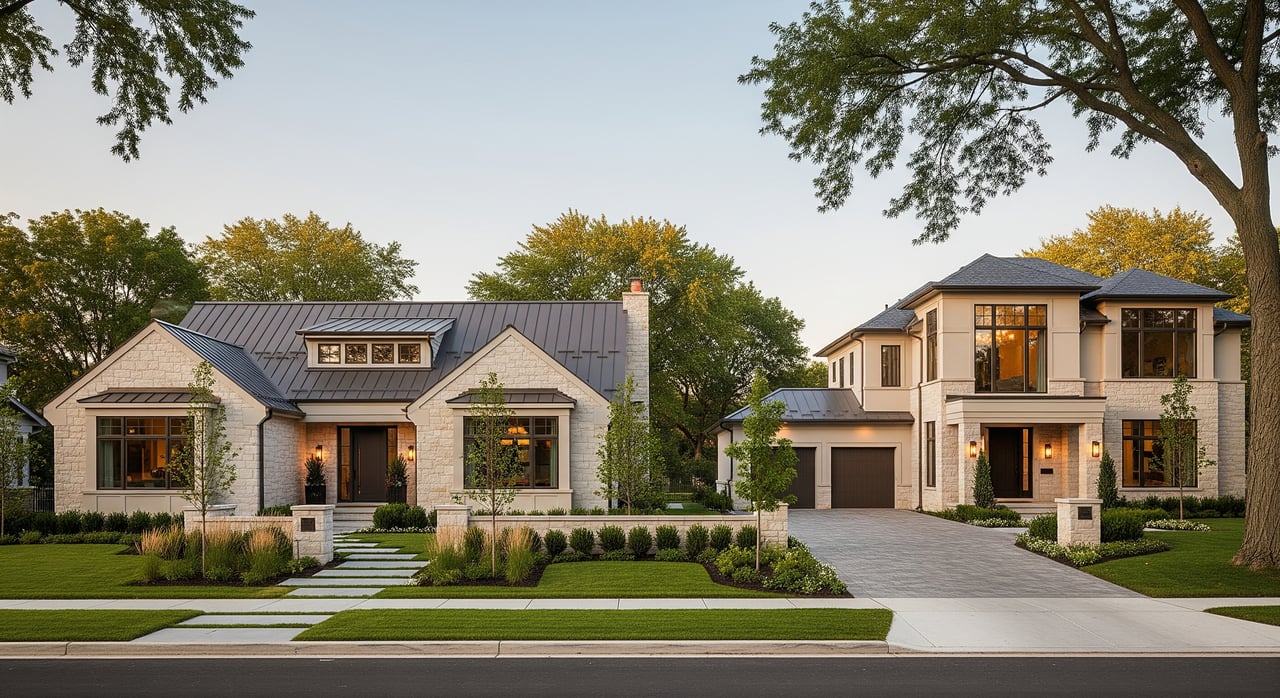
Thinking about a ranch or a two-story home in Buffalo Grove? You’re not alone. Many buyers in the northwest suburbs face this same decision as they plan a move, rightsize, or look ahead to the next chapter. In this guide, you’ll get a clear, local comparison of how each home type lives, what it costs to maintain in our climate, and how it can impact resale. Let’s dive in.
Buffalo Grove housing at a glance
Buffalo Grove spans both Lake and Cook counties. You’ll see mid‑century ranches and split‑levels in older neighborhoods, and larger two‑story homes in subdivisions that grew from the 1980s through the 2000s. Most detached homes here include basements, which add valuable storage and finishable living space.
Exterior materials often include brick veneer, siding, and composite shingles. Winters and freeze–thaw cycles make roof age, insulation, gutters, and driveway condition important. Older areas can have slightly larger lots and mature trees, while newer sections may offer more above‑grade square footage on smaller lots.
Ranch homes: what to expect
Layout and livability
Ranch homes place your primary living spaces on one level. That can mean an easy kitchen-to-patio flow and simpler daily circulation. Bedrooms in older ranches can be modest, and expanding square footage usually means building out (if the lot and setbacks allow).
Accessibility and aging in place
Ranches offer a strong baseline for single‑level living. Minimal changes like grab bars or a walk‑in shower can make them even more comfortable long term. If you want step‑free living, a ranch provides a straightforward path.
Maintenance and ongoing costs
With one story, exterior tasks (windows, gutters, siding repairs) are easier to access. Heating and cooling can be more even with a single zone, though system age matters. If the ranch sits on a larger lot, plan for more yard care.
Storage, garage, and basement use
Attached garages are common, and the basement often carries the load for storage and bonus living areas. In our area, evaluate sump pumps, drainage, and waterproofing to protect those lower-level spaces.
Two‑story homes: what to expect
Layout and livability
Two‑story homes separate living areas on the main level from bedrooms upstairs. You get more above‑grade space without a bigger footprint, which can help if you want extra bedrooms or a dedicated office. Stairs become a daily factor, and sound can travel between floors.
Accessibility and aging in place
If you prefer a two‑story but want long‑term flexibility, look for a first‑floor bedroom suite or a layout that can convert one. Chair or stair lifts are options, though costs and feasibility depend on the floor plan and roofline.
Maintenance and ongoing costs
Two‑story exteriors have more wall area and height, which can raise the cost for siding, gutter work, and painting. Roofs can be more complex, and HVAC systems may need zoning to keep both levels comfortable. Shorter driveways in some newer subdivisions can reduce winter snow removal.
Storage, garage, and basement use
Two‑story plans often prioritize bedrooms, while basements provide the flexible space for recreation or guest areas. As with ranches, basement condition and drainage are key here in northern Illinois.
Which fits your next chapter
Upsizers often choose two‑story homes for extra bedrooms, an additional bathroom, and separate living zones. Downsizers or those planning for accessibility frequently favor ranches or two‑story layouts with a main‑level suite. In Buffalo Grove, proximity to parks, shopping, and commuter routes can influence what feels best for daily life.
If schools and commuting factor into your decision, compare specific neighborhood boundaries and travel times. Timing matters too: family moves often center around the school calendar, while downsizers may have more flexibility.
Resale and value patterns
In this market, finished basements add meaningful functional space regardless of home type. Ranches can be appealing for their one‑level convenience, especially when updated. Two‑story homes can offer strong price efficiency per square foot due to their smaller footprint on the lot.
Lot size and privacy typically influence price across both styles. Renovations that modernize kitchens and primary baths, improve energy efficiency, or add a main‑level suite (where feasible) can broaden buyer appeal.
Renovation and retrofit ideas
- Low‑cost updates: lever handles, improved lighting, handrails, non‑slip flooring, and grab bars.
- Moderate projects: zero‑threshold shower, wider doorways (where structure allows), and laundry relocation to the main level.
- Larger changes: first‑floor primary suite additions, stair/chair lifts, or converting a den to a bedroom with an adjacent bath.
Check local permit requirements for structural, electrical, or plumbing changes. A strategic pre‑listing refresh can also help sellers compete; improvements and staging done thoughtfully tend to photograph and show better.
Inspection focus in Buffalo Grove
For ranch homes
- Roof age and flashing, plus gutter drainage away from the foundation.
- Basement waterproofing, sump pump function, and grading.
- HVAC age and distribution, window condition, and garage systems.
For two‑story homes
- Stair safety, handrails, and baluster spacing.
- Attic insulation and ventilation for comfort and ice dam prevention.
- HVAC zoning and airflow balance between floors; roof details around dormers and wall intersections.
How to compare listings like a pro
- Confirm age and era: older ranch or split‑level vs later two‑story subdivision.
- Square footage: note above‑grade space, plus finished basement area.
- Lot and driveway: assess yard size, tree coverage, and winter snow‑removal needs.
- Systems and envelope: roof age, HVAC age, windows, insulation, and siding condition.
- Layout essentials: first‑floor bedroom options, bathroom count, home office space.
- Taxes and records: verify tax bills, permits for additions, and basement finishing.
When possible, compare a ranch and a two‑story on similar lots to see how layout and finished lower levels affect price and daily functionality.
Quick decision checklist
- Do you want all main spaces on one level?
- Will stairs help or hinder your daily routine?
- Do you prefer a larger yard or more interior space?
- How important is a finished basement to your lifestyle?
- What upgrades would you need to love the home for 5–10 years?
Ready to tour options
Whether you’re upsizing, downsizing, or simply weighing trade‑offs, you deserve a plan tailored to your timeline and budget. If you’re selling, a polished prep and staging strategy can boost exposure and results. If you’re buying, a clear comparison of neighborhoods, layouts, and renovation paths will help you move confidently.
If you want a local, step‑by‑step plan for your next move in Buffalo Grove, reach out to Shamar Brossard. We’ll clarify your options, map out the right search or sale strategy, and get you moving with confidence.
FAQs
What are the main differences between ranch and two‑story homes in Buffalo Grove?
- Ranches offer single‑level living and simpler exterior maintenance, while two‑stories provide more above‑grade space and separation of living and sleeping areas.
How does Buffalo Grove’s climate affect home maintenance by type?
- Freeze–thaw cycles make roof, gutter, and driveway care important for both types, and two‑stories can have higher exterior access and HVAC balancing needs.
Are basements common in Buffalo Grove homes?
- Yes, full basements are common and add valuable storage and finishable living space across both ranch and two‑story homes.
Can a two‑story work for aging in place?
- Yes, if you have or can create a main‑level bedroom suite or install a stair solution; feasibility and cost depend on the layout and structure.
Do ranch homes limit future expansion?
- Expansion usually means building out horizontally if lot size and setbacks allow, while some owners of ranches consider adding a second story after evaluating structure and permits.